|
|
Siwa:
The most inaccessible of all Egypt's oases until very
recently, is also one of the most fascinating. On the edge of the
Great Sand Sea, its rich history includes a visit from Alexander
the Great to consult the Oracle of Amun in 331 B.C. Siwans have
their culture and customs and they even speak a language of their
own, Siwi, rather than Arabic. Many women still wear traditional
costumes and silver jewelry like those displayed in The
Traditional Siwan House museum in the town center. Siwa remains
one of the best places to buy jewelry, rugs, baskets, traditional
robes and headdresses decorated with antique coins.
The original settlement, Aghurmi, was
superseded by Shali, founded in 1203. Built of salt-impregnated
mud of kharsif, the fortress-like community expanded upwards
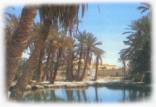
rather than outwards. Set among thick palm groves, walled gardens
and olive orchards, with numerous freshwater springs and salt
lakes, modern Siwa clusters beneath the remains of ancient Shali.
Climb through the ruins of the old city for magnificent views of
the whole oasis. Walk, hire a bicycle or ride in a caretta (donkey
cart) to outlying sights and bathing places.
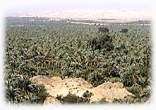
The area has a nice climate, chilly in winter, hot in the summer
and moderate in the spring and autumn. The area is famous for its
dates and olives, and is one of the most beautiful landscapes in
Egypt. Olive oil is still made in the area by crushing the olives
from the 70,000 olive trees in the area with stones. The dates are
gathered by "zaggala" (stick bearers), who must remain
celibate until the age of forty, and the area boasts some 300,000
date trees. It is located on the old date caravan route, yet until
recently, it received few other visitors and retained much of its
heritage. In fact, until the battles, which took place around the
oasis in World War II, it was hardly governed by Egypt, and
remained mostly a Berber (Zenatiya) community for the prior
thirteen centuries. Interestingly, each October there is a
three-day festival during which Siwans must settle all of their
past year's disputes.
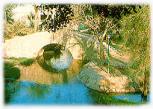
The area is also famous for its springs, of which there are
approximately 1,000. The water is sweet, and is said to have
medical properties.
Bahareya :
Set in a depression covering over 2000 sq. km. Bahariya
Oasis is surrounded by black hills made up of ferruginous
quartzite and dolerite. Most of the villages and cultivated land
can be viewed from the top of the 50-metre-high Jebel Al-Mi'ysrah,
together with the massive dunes, which threaten to engulf some of
the older settlements. Wildlife is plentiful, especially birds
such as wheatears; crops (which only cover a small percentage of
the total area) include dates, olives, apricots, rice and corn.
The Oasis was a major agricultural center during the Pharaonic
era, and has been famous for its wine as far back as the Middle
Kingdom. During the fourth century, the absence of Roman rule and
violent tribes in the area caused a decline as some of the oasis
was reclaimed by the sand.
There are a number of springs in the area, some very hot, such as
Bir Al-Ramla but probably the best is Bir Al-Ghaba, about 10 miles
north east of Bawiti. There is also Bir al-Mattar: a cold spring
which pours into a concrete pool
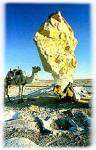
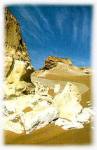
Otherwise near the Oasis are the Black and White deserts, though
traveling to the White desert seems not practical from the oasis.
The Black Desert was formed through wind erosion as the nearby
volcanic mountains were spewed over the desert floor. There are
also the ruins of a 17th Dynasty temple and settlement, and nearby
tombs where birds were buried.
The
Town of Bawiti :
With some 30,000 inhabitants, Bawiti is the largest village in the
oasis; its picturesque hillside quarter overlooks lush palm groves
irrigated by the Ain Al-Beshmo, a natural spring hewn from the
rock in Roman times which gushes water at 30 degrees C. The
neighboring village of Al-Qasr was built on the remains of a 26th
dynasty temple-nearby, at Qarat Hilwah, you can still see tombs
with paintings dating from the same period. The town center is
modern, while outside the center are mud-brick houses. Recently,
the town has received considerable press due to the find of a huge
(possibly the largest) necropolis of mommies from the Greco-Roman
era.
Next
|